The Player
An interactive music visualization tool that translates sound into real-time geometric animations, built in Processing.
Creative Coding
Music Visualization
Role
Creative Technologist
Timeline
6 weeks
team
Self-Directed
platform
Processing
The Brief
I used to work in the music industry and was always fascinated by the shows that the visual jockeys would display behind the performing artists. These visuals were almost always pre-planned for large shows, and I used to ponder how amazing it would be to have a software program that could generate art determined by the sounds of each performance.
This project aims to achieve this goal of translating sounds and music into visual art.
Building the System
The technical challenge was creating a system that could analyze audio input and translate it into compelling visual output in real-time. I built the program around several core components:
Audio Analysis. The program captures live audio input and analyzes it for key properties: frequency bands, amplitude levels, and beat detection. These become the data sources that drive all visual behavior.
Visual Mapping. Different audio properties map to different visual behaviors. Low frequencies might control the scale of larger shapes, while high frequencies drive the movement of smaller elements. Beat detection triggers more dramatic visual events.
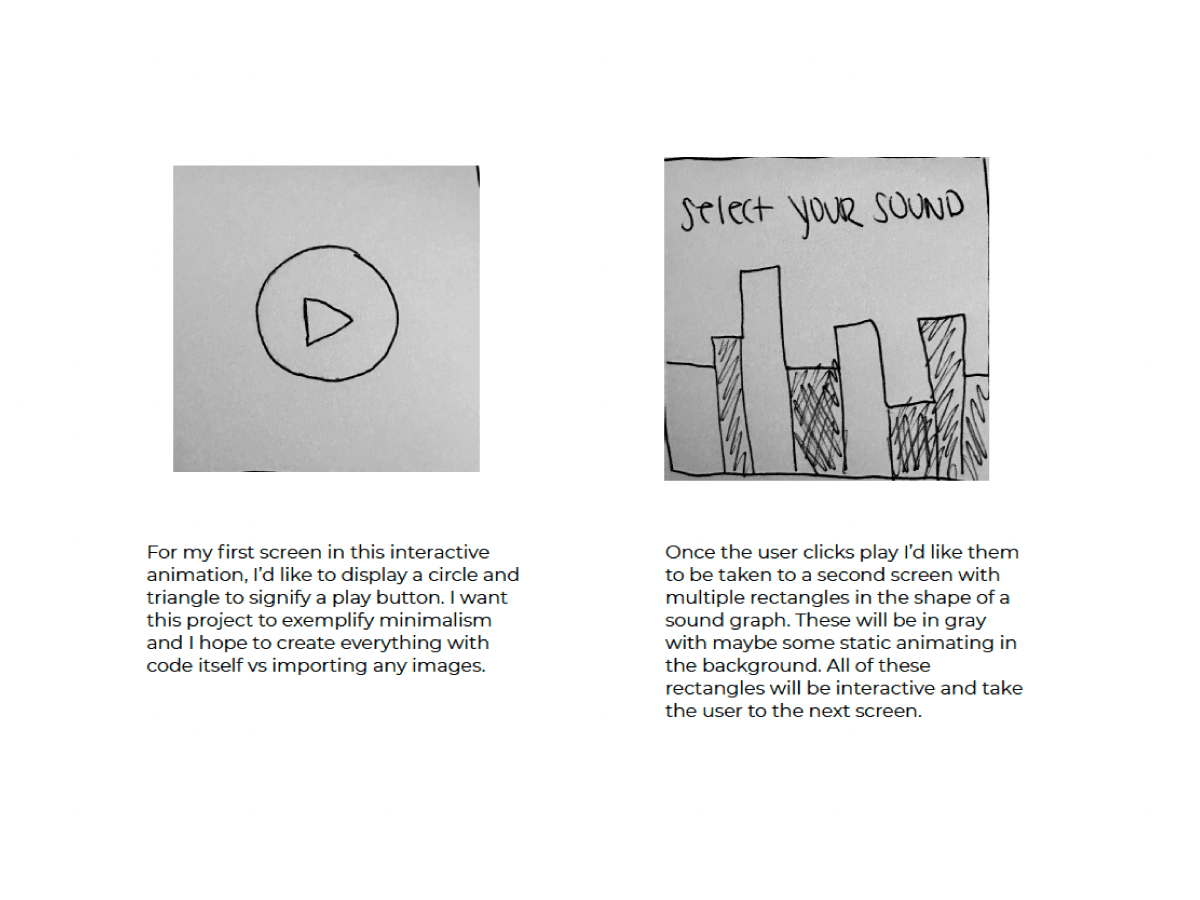
Geometric System. The visual language centers on animated rectangles that can grow, shrink, move, and layer based on the audio input. The shapes maintain clean geometric relationships even while responding dynamically to the music.
Real-time Rendering. Everything happens live. There's no pre-rendering or pre-planned sequences. The visuals you see are being generated in the moment, directly from whatever music is playing.
What It Does
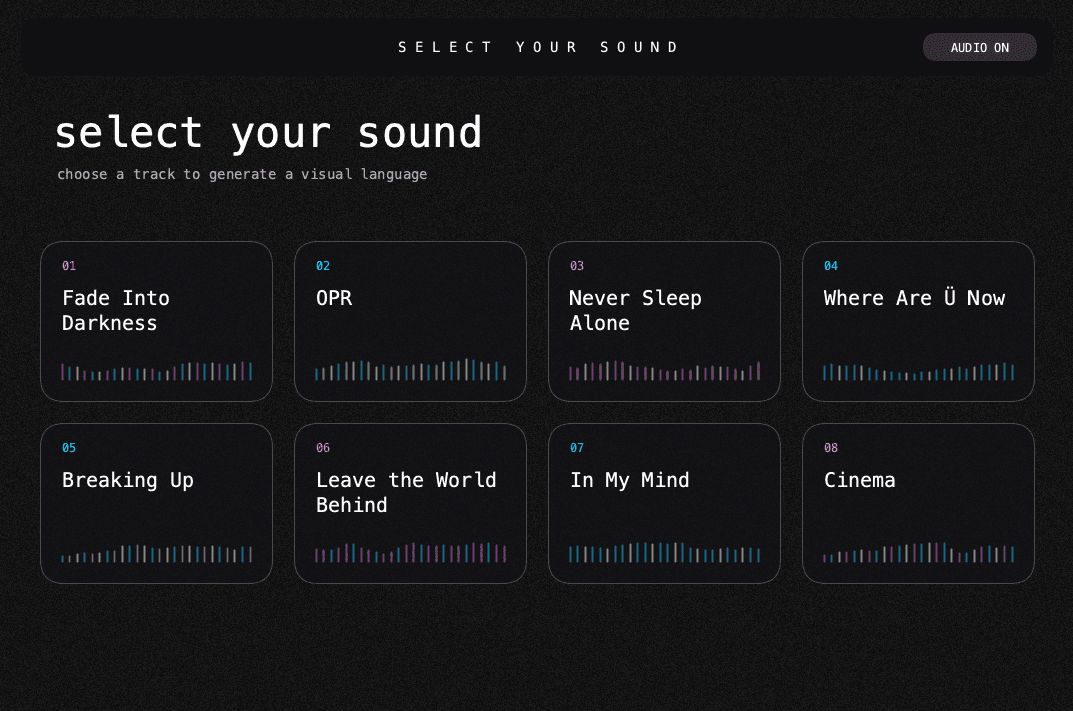
The Player creates live generative visuals from any audio input. Users can feed music into the system and watch as geometric shapes respond in real-time. Different songs create completely different visual experiences because the program is actually listening to and responding to the musical content, not just providing a generic light show.
The visual output feels musical rather than random. Quiet passages generate subtle movements, while crescendos trigger more dramatic visual events. The rhythm of the music becomes visible through the animation timing. Frequency content determines which shapes are active and how they behave.

Technical Execution
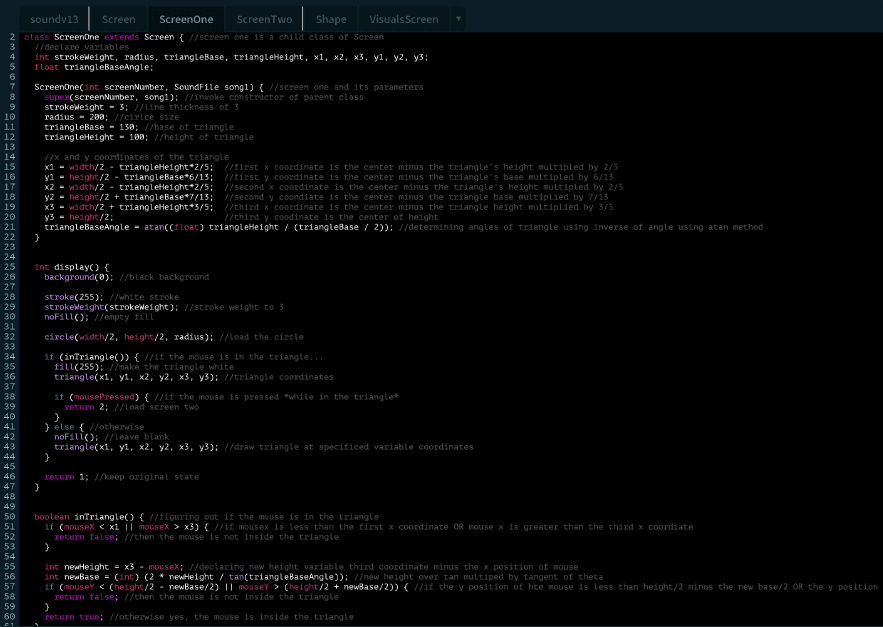
I built the program in Processing using its sound analysis libraries. The core architecture processes incoming audio through several stages:
Input Processing. Audio gets analyzed in real-time for frequency content using Fast Fourier Transform (FFT), which breaks the sound into component frequencies.
Data Mapping. The frequency data maps to visual parameters through custom algorithms I developed. Different frequency ranges control different aspects of the visual system.
Animation Engine. A custom animation system manages the lifecycle of visual elements, creating smooth transitions and maintaining visual coherence even as new elements appear and disappear.
Rendering Pipeline. The final visuals render at 60fps to maintain smooth animation. The system can handle complex scenes with multiple animated elements without dropping frames.
The Approach
The challenge was building something that could listen to music in real-time and create visuals that felt connected to what was being heard, not just random animations with audio playing in the background. I wanted the visual output to be genuinely responsive to the musical input, changing based on frequency, amplitude, and rhythm.
I chose Processing as the development environment because of its strength in creative coding and built-in audio analysis capabilities. The language gave me direct access to sound data while making it relatively straightforward to create animated visual responses.
The concept centered on geometric abstraction. Rather than trying to create literal representations of music, I focused on translating audio properties into the movement, scale, and behavior of simple shapes. Rectangles became the primary visual element because their clean lines and ability to scale dynamically made them perfect for representing the structured-yet-fluid nature of music.
Solo Development
Building both the audio analysis and visual generation systems alone meant making strategic decisions about where to focus development effort. Every feature, every bug, every creative direction was mine to own, which meant learning to prioritize ruthlessly and solve problems without handing them off.
What I'd Do Differently
I'd expand the visual language beyond rectangles. While the geometric approach worked well as a foundation, adding circles, lines, and more complex shapes would create richer visual possibilities.
I'd also build in more user control over the mapping between audio and visuals. Different types of music might benefit from different visual approaches, and giving users the ability to adjust these mappings would make the system more versatile.
The color system could be more sophisticated. The current version uses a limited palette, but music has emotional and tonal qualities that could drive more complex color relationships.
What I Learned
Real-time systems demand different thinking. Everything has to work within strict timing constraints. Elegant algorithms that work fine for static applications can cause frame rate drops in real-time systems.
Audio analysis is both simpler and more complex than expected. The basic math (FFT, amplitude detection) is straightforward. The art is in deciding how to map that data to visual behavior in ways that feel musical rather than mechanical.
Generative art succeeds through constraint, not freedom. Having infinite visual possibilities doesn't create better art. The project worked because I limited the visual vocabulary to rectangles and focused on making those rectangles behave in musically meaningful ways.